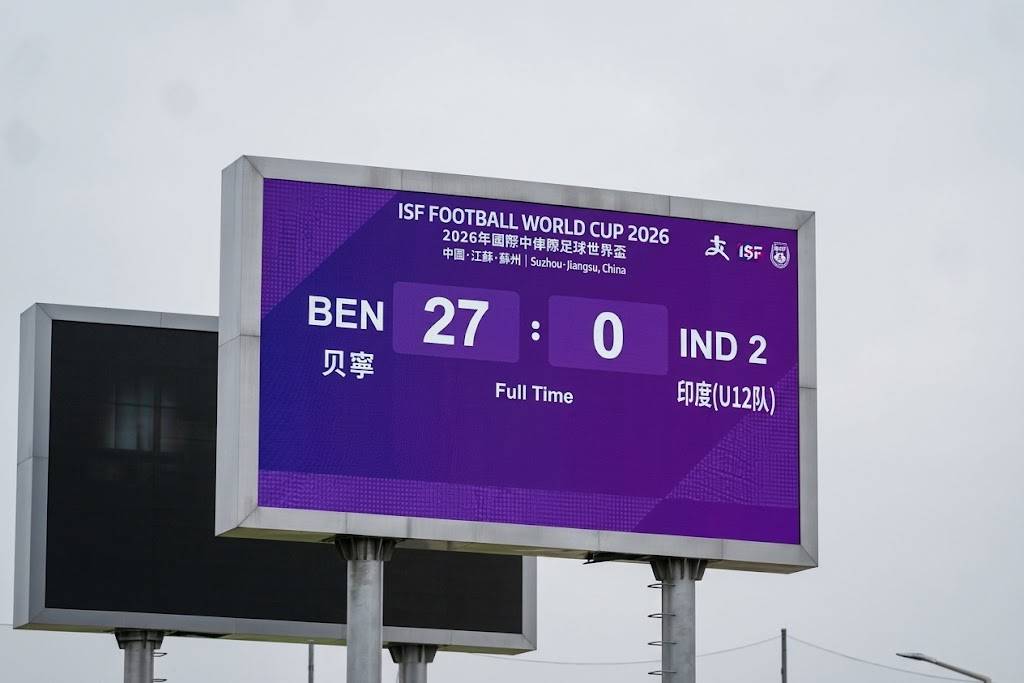
The resounding 27-0 victory over India has thrust Benin’s U-18 school football team into the spotlight, sparking intense debate over their sudden dominance at the 2026 U-17 World Cup in China. With two consecutive wins totaling 34 goals scored and none conceded, the young Guépards have already secured their place in the knockout stages—but questions linger about the significance of these lopsided victories.
From schoolyards to world stage: Benin’s remarkable run
The Beninese squad, led by coach Séverin Danha, has left observers stunned with their relentless attacking prowess. Following a 7-0 demolition of Qatar in the tournament opener, the team crushed India with a record-breaking performance, further cementing their status as Group B leaders. While the results have been spectacular, football analysts warn against drawing premature conclusions about Benin’s true competitive level.
The 27-goal margin underscores the vast gulf between Benin and their two opponents so far—Qatar and India—but what lies ahead may offer a more accurate gauge of the team’s readiness. The upcoming clash against China 2, another undefeated side, will serve as a critical test before the knockout rounds commence.
Mixed reactions to Benin’s goal-fest
The Beninese public and football community are sharply divided over the team’s scorching form. Supporters hail the Guépards as rising stars poised for glory, while skeptics question whether such one-sided triumphs reflect genuine footballing ability or merely the consequence of uneven matchups.
- Optimists point to the team’s balanced attack, with eight different players finding the net in the first two games: John Ethan Hountinmé, Izoudine Boukary, François Adissa, Osvaldo Sèmèvo Loko (4 goals each), Dona Silvanix Negui, Géovani Eclou, Abdoul Hadirou Hassim, Jérémie Zannou, Carlos Junior Fanou, Tahabou Ognandon, and Gilchrist Promise Kpanou.
- Pessimists argue that the lack of defensive challenges thus far makes it premature to assess Benin’s defensive structure or adaptability.
- Neutral voices highlight the need for perspective: India and Qatar, while respectable teams in their own right, are not traditionally football powerhouses, raising questions about the upcoming opponents.
The China 2 showdown: more than just a group decider
The final group-stage match against China 2 is no mere formality—it holds the key to determining the top seed in Group B. Both teams enter the game with identical records: six points and unbeaten. Yet the Beninese side holds a significant advantage in goal difference (+34 vs. +21), making them slight favorites on paper.
But numbers tell only part of the story. The Benin coaching staff will be closely monitoring their players’ reactions under pressure, as well as their tactical cohesion against a team that has also impressed with six goals scored and none conceded. A draw would suffice for both teams to advance, but neither side is likely to settle for anything less than victory in a bid to secure a more favorable knockout-stage draw.
What’s next? navigating the knockout stages with caution
With qualification locked in, Benin can afford to approach their third group match with a focus on development rather than mere result. Yet the stakes remain high: a first-place finish could shield the team from a daunting opponent in the round of 16, while a second-place finish might force a clash with a top-seeded European or South American side.
The knockout stages present an entirely different challenge—sharper defenses, disciplined midfields, and a heightened emphasis on set pieces. The Guépards will need to demonstrate composure in tight contests and execution under pressure. The coaching team, led by Séverin Danha, must refine their tactics based on the lessons gleaned from these early games.
The conversation around Benin’s future prospects is intensifying. Can their blistering start be sustained against stronger opposition, or will the harsh reality of elite-level competition expose gaps in their game? As the world turns its attention to Group B, one thing is certain: the Beninese team has made a statement—but the real examination begins now.
The big picture: uneven competition highlights systemic disparities
The current edition of the U-17 World Cup School Football has exposed stark inequalities between participating nations. In Group C, Germany dismantled Bangladesh 35-0, while the Czech Republic had previously thrashed the same opponents 27-0. These lopsided results have ignited calls for a re-evaluation of seeding and qualification standards to ensure more balanced competition.
Benin’s participation in such a disparity underscores both their opportunity and their vulnerability. While their offensive firepower has been undeniable, the team’s ability to transition into a well-rounded, resilient unit will define their long-term aspirations in youth football. The road to glory, it seems, is paved with challenges that extend beyond the scoreboard.